AP Physics C Study Guide That Actually Builds Fluency
A practical AP Physics C study guide built around calculus fluency, exam structure, and FRQ strategy for Mechanics and E&M success.

You can be a strong Physics student and still feel stalled the first time you open AP Physics C notes. The problem usually isn't that you forgot physics, it's that the course asks you to turn a word problem into calculus before you can even start thinking about the answer. If your instinct is to hunt for a formula and plug in numbers, this class will punish that habit fast.
That mismatch is why a lot of students study hard and still feel stuck. AP Physics C rewards students who can read a situation, choose the right mathematical relationship, and show the setup clearly under time pressure. A good AP Physics C study guide has to train that translation skill first, then drill the content that sits inside it.
Table of Contents
- Why AP Physics C Feels Harder Than It Should
- The Exam Structure and What It Rewards
- The Calculus You Actually Need First
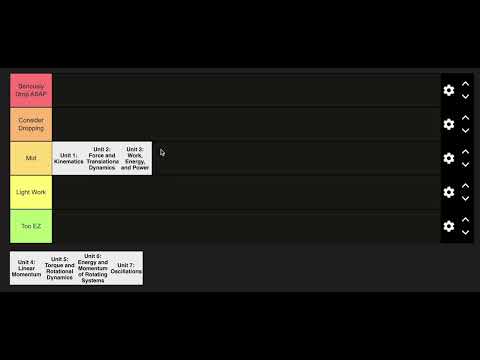
- Mechanics Topics Ranked by How Often They Appear
- Electricity and Magnetism Through the Calculus Lens
- Which Exam to Prioritize When Time Is Short
- A Four-Week Execution Plan You Can Start Tonight
Why AP Physics C Feels Harder Than It Should
A student can look at a problem, understand the physics idea, and still freeze. The hard part is often the first translation step, deciding what the math should look like. AP Physics C is built around quantitative, calculus-based mechanics, so the exam expects you to turn motion, force, work, and energy into derivatives or integrals before you ever reach for a calculator.
Why old Physics 1 habits stop working
Physics 1 often lets students survive by matching a situation to a formula and moving on. AP Physics C gives less credit for that habit, because the setup itself is part of the answer. The course expects students to set up and evaluate derivatives and integrals in physics contexts such as kinematics, force, work, and energy, so the task is converting a verbal description into a calculus relationship.
That is why a student can “know” kinematics and still miss points. They may understand that acceleration is changing velocity, but freeze when asked to write a = dv/dt or build the velocity function from a graph. The same pattern shows up with work, momentum, and rotation. The idea is there, but the translation step never gets written clearly enough for credit.
Practical rule: if you can explain the physics verbally but cannot write the math line cleanly, the problem is in the setup, not in the concept.
A strong AP Physics C study guide has to treat that setup gap as the main event. The study habit that helps most is not rereading notes, it is practicing how to move from words to equations. Short, focused review usually works better than broad rereading, especially when the course starts feeling dense, and that fits the habits described in how to study smarter, not harder.
What the exam is really asking
Most missed points come from one of three places. Students choose the wrong variable, they write the right formula with the wrong sign, or they never show the calculus step that justifies the answer. Content still matters, but the exam rewards students who can build the equation cleanly and carry it through without losing the reasoning.
That is the shift students have to make early. AP Physics C is not a memorization contest dressed up as advanced physics. It is a translation exam, and the faster you train yourself to write the calculus setup before the arithmetic, the faster your score starts to move.
The Exam Structure and What It Rewards
Before you choose what to study, you need to know what the test is built to reward. The AP Physics C: Mechanics exam is a 90-minute test with 35 multiple-choice questions and 3 free-response questions, and the two sections count equally at 50% each. That structure matters because roughly half the score comes from only three FRQs, which makes writing quality as important as content knowledge.

What that timing means in practice
A timed AP Physics C session is short enough that hesitation becomes expensive. If you spend too long deciding whether a problem is energy or kinematics, the clock starts eating the score. The best students do not rush. They classify the problem quickly, write the governing relationship, and then calculate.
That matters even more on the FRQs, where a correct idea can still lose credit if the setup is unclear. A student who knows the topic but cannot write the first calculus line cleanly is leaving points on the page. On these questions, graders are looking for the physics translation, not just the final number.
The exam design also means you cannot overtrain one section and ignore the other. A student who does lots of multiple-choice drills but almost no FRQs is practicing only half of the exam. A student who writes FRQs without enough timing pressure may understand the content but still fail to finish on test day.
The official course framework organizes the exam around clearly defined skills and content categories, which is another clue that your studying should be problem-oriented rather than purely memorization-based. Sort your notebook by task, not just by chapter title. That is a better match for what earns points under time pressure.
What to copy into your own study calendar
| Study habit | Why it matches the exam |
|---|---|
| Timed MCQ sets | Trains quick recognition and setup |
| Full FRQ writing | Trains the reasoning the rubric wants |
| Error log by topic and by calculus step | Shows whether the problem is physics or setup |
| Formula recall with derivation practice | Prevents shallow memorization |
Exam-day truth: if you cannot write the first line of a solution quickly, you are not ready yet, even if you recognize the topic.
The parallel E&M exam uses the same kind of calculus-based structure, so the same logic applies there as well. Do not study by guessing what feels familiar. Study by matching your practice to the way the test gives and takes away points.
The Calculus You Actually Need First
A lot of students overcomplicate this part. You do not need every advanced calculus technique to start getting better at AP Physics C. You need a small set of operations that show up again and again, and you need to recognize them in physics language, not abstract math language.
A student staring at a free-response problem usually loses points in the same place, right at the translation from situation to setup. The math is often simpler than it looks. The hard part is deciding whether the problem wants a derivative, an integral, or a relationship between variables before any numbers matter.
The core moves that keep coming back
Start with derivatives. If position is given as a function of time, velocity is the derivative, and acceleration is the derivative of velocity. That chain is the backbone of kinematics, and students lose points when they treat it like a memorized fact instead of an actual calculation. The same pattern shows up in rotation, where angular velocity and angular acceleration come from derivatives of angular position.
Integrals matter just as much. Work is the integral of force over displacement, and electric potential differences are built from line integrals of electric field. In mechanics and E&M alike, the exam often asks you to move from a physical picture to an accumulated quantity, not just a value at one point.

The setups students miss most often
The hardest calculus move is usually not the arithmetic. It is choosing the variable and writing the dependence correctly. Here are the patterns that matter most:
- Derivatives of motion: write v = dx/dt and a = dv/dt when the problem starts with position or velocity as a function.
- Integrals for accumulation: write W = ∫F · dx when work depends on force across distance.
- Component breakdowns: split vectors before applying Newton's laws, especially on inclines and in circular motion.
- Differential equations: use them when a restoring or feedback force depends on displacement or charge, as in oscillation-style setups.
- Rotation relationships: connect angular position, angular velocity, and angular acceleration the same way you do linear motion.
If you want a faster way to train those setup choices, build flashcards that force you to write the first equation from a verbal prompt. A good guide on how to make flashcards online can help you turn that into a repeatable routine.
The AP Physics C course description expects students to set up derivatives and integrals in physics contexts such as kinematics, force, work, and energy. That means your practice should force you to write the calculus step, not just circle the final answer.
What costs points fastest: sign mistakes, skipped differential steps, and “I knew what they meant” answers that never actually show the math.
If your calculus is rusty, do not try to fix everything at once. Build a short list of operations you can execute cold, then attach each one to a physics context. That is a better use of time than rereading an entire calculus unit and hoping it transfers.
Mechanics Topics Ranked by How Often They Appear
Mechanics feels huge when you look at it as a list of topics. It feels manageable when you look at it as a small number of recurring problem shapes. Students usually improve faster when they learn to recognize the setup pattern first, because the topic becomes obvious once the first line is written.
The problem types worth recognizing on sight
Kinematics is still the easiest place to lose points if you assume every motion problem is constant-acceleration plug-and-chug. Some problems begin with a graph, others with a position function, and a few ask you to infer the sign of velocity or acceleration before any numbers matter. The setup line should come first, not the calculator.
Energy problems reward clean system choices. Students often forget to define the initial and final states before writing the conservation equation, which leads to missing work terms or sign errors on friction. Momentum problems do the same thing with collisions, especially when students forget to define which object system they're analyzing.
Rotational motion is where many strong students stumble because they treat it as a separate subject instead of a parallel language. If you can connect torque, moment of inertia, and angular acceleration early, the problem gets much easier. Simple harmonic motion, meanwhile, is often about reading a differential relationship correctly and recognizing what the period depends on.

The first three lines I'd want on the page
A strong FRQ setup usually starts the same way:
- Draw the system. Identify forces, motion, and what's inside the system.
- Define the variables. Choose a direction, label the unknowns, and state what is constant.
- Write the governing equation. Use Newton's second law, energy, momentum, or rotation before calculating.
That sequence matters more than the final arithmetic. A student can recover from a small algebra slip, but not from a missing model of the system.
I'd also tell students to practice the little archetypes repeatedly. Pulleys, inclines with friction, spring-mass systems, and circular motion all recycle the same first-step thinking. If you know which archetype you're facing, the rest of the solution is much more likely to cooperate.
How to make flashcards online works best as a support tool here, not as the main study method. Use flashcards for the definitions, symbols, and common relationships, but make your real practice come from solving the full setup.
Electricity and Magnetism Through the Calculus Lens
E&M intimidates students for a different reason than mechanics. The formulas feel less intuitive, the sign conventions matter more, and symmetry becomes part of the math. If you try to study it like an algebra unit, it turns into a maze.
The five clusters you keep seeing
The AP Physics C E&M course centers on electrostatics, conductors and capacitors, electric circuits, magnetism, and electromagnetic induction, and all five lean heavily on calculus-based reasoning. In electrostatics, you often need an integral to move from charge distribution to field. In induction, you often need a derivative to connect changing flux to induced emf.
The turning point is symmetry. A Gaussian surface only helps if the geometry makes the field simple enough to factor out of the integral. The same goes for Amperian loops. Students who skip the symmetry check often build an elegant integral around the wrong shape and then wonder why the math won't simplify.
The sign convention trap
E&M punishes sloppy signs more than almost any other AP Physics C topic. If you don't define positive direction before you start, you can still get a believable-looking answer that is completely wrong. That's especially common in capacitor, circuit, and induction problems, where the polarity or direction depends on the setup you chose at the beginning.
Best habit for E&M: write the geometry first, then the field direction, then the integral. If you reverse those steps, the signs usually bite you.
A useful way to study this unit is to force yourself to say what the symmetry is before you solve. Spherical symmetry suggests one strategy, cylindrical symmetry suggests another, and planar symmetry suggests another. Once that decision is right, the calculus often becomes much cleaner.
A compact comparison for the two exams
| Topic cluster | First question to ask | Why it matters |
|---|---|---|
| Electrostatics | What symmetry does the charge distribution have? | Chooses the integral setup |
| Conductors and capacitors | Where is the potential difference measured? | Fixes the reference and sign |
| Circuits | What is conserved around the loop? | Organizes current, voltage, and resistance |
| Magnetism | Is the field coming from current or motion? | Prevents mixing up source terms |
| Induction | What is changing with time? | Links flux change to emf |
The exam rewards students who can write the integral form before choosing numbers. That's the same translation skill you built in mechanics, just with more emphasis on fields, potentials, and direction. A good AP Physics C study guide should make E&M feel like a set of controlled choices, not a pile of unrelated formulas.
Which Exam to Prioritize When Time Is Short
If you're taking both exams and time is tight, “study Mechanics first” is not always the right move. The better choice depends on your calculus comfort, your school schedule, and which weaknesses are dragging you down. A student who already handles mechanics fluently may get more return from starting E&M earlier, while a student who still hesitates on integrals should clean up Mechanics first because it's the cleaner place to build setup confidence.
A simple decision rule
| Your situation | Study first | Why |
|---|---|---|
| You struggle to turn words into derivatives or integrals | Mechanics | The setup practice is simpler and more repetitive |
| You can handle mechanics FRQs but freeze on Gauss's law or induction | E&M | Your mechanics base is already good enough to shift over |
| Your calculus is shaky in both courses | Mechanics | It exposes the same translation skill with fewer sign traps |
| You're strong on calculus and need harder field practice | E&M | The challenge is likely in geometry and symmetry, not math |
The reason this matters is that the best order is the one that removes the most friction first. If you spend a week doing hard E&M problems while your derivative setup is still weak, you'll learn slowly and feel worse than you need to. If you spend a week on Mechanics and your setup gets cleaner, you may build the confidence you need to move into E&M with less drag.
What not to do
Don't let the course label decide for you. Don't assume the “harder” class deserves your attention first just because it sounds more advanced. Start with the exam, the weakness profile, and the kind of calculus error you keep making.
Another useful filter is school timing. If one course still has fresh class coverage and the other is mostly review, the live course usually deserves the more immediate attention. If both are review-only, then the weakest calculus transfer skill should drive the order.
The point is to make a decision tonight, not after another week of guessing. A study plan becomes effective when it matches your bottleneck, not when it looks fair on paper.
A Four-Week Execution Plan You Can Start Tonight
A strong plan should do one thing well, then move on. Don't build a perfect calendar you can't follow. Build a plan that fixes the biggest setup leak first, then adds timed practice once the writing starts to improve.
Week by week
Week 1, calculus audit. Spend your first sessions on derivatives, integrals, components, and sign conventions. Work through a few problems slowly and force yourself to write the setup line before the answer. If a step keeps breaking, that's the gap to repair, not a cue to move faster.
Week 2, Mechanics FRQs under time. Do full free-response problems and mark every place where you hesitated, skipped a variable definition, or wrote a formula too early. Then rewrite the setup cleanly. That rewriting step is where the learning sticks.
Week 3, E&M FRQs. Put extra time into symmetry, fields from charge distributions, and induction if those are your weak points. Keep the geometry visible and write the sign convention before any integral. If the setup feels fuzzy, slow down and make the field or potential statement explicit.
Week 4, mixed practice and scoring language. Mix Mechanics and E&M under timed conditions, then review released FRQ scoring guidelines carefully. The goal is to see how points are earned, not just to check whether your answer looked reasonable.
How to create study guides is useful here because your notes should become an active review tool, not a pile of copied formulas. Reformat the problems you miss into short prompts, and keep the calculator work separate from the reasoning step so you can drill both.
Weekly checkpoint: if you can't write the governing equation quickly after a week of practice, repeat the week's core problems instead of adding new ones.
Use this plan as a scaffold, not a religion. If one topic stays broken, slow down and repair it before moving on. That's how a shaky review schedule turns into an actual score gain.
If you want a smarter way to turn your class notes, lecture recordings, and practice sets into a review system that helps you solve problems faster, visit ClassLecture.ai and build study materials around the exact content you're missing. It's a practical fit for AP Physics C because the course lives or dies on setup, not just memory.
The ClassLecture.ai Team
We build ClassLecture.ai, the AI study assistant that turns your recorded lectures into transcripts, summaries, flashcards, and answers cited to the exact timestamp — so you learn faster from your own professor's words.
Keep reading
Flashcards for Study Notes That Actually Stick
Learn how to turn class notes and recordings into flashcards for study notes that boost recall with manual and AI workflows, spacing, and review tips.
ReadPsych 101 Review: Core Topics, Practice Q&A, and Study Tools
A practical psych 101 review with core topics, key terms, sample Q&A, and study tools to help you prep for exams and master intro psychology.
ReadLecture Notes AI Explained How It Turns Lectures Into Study
Discover what lecture notes AI does, how it works, its benefits and limits, and how to turn recordings into transcripts, flashcards and Q&A.
Read